


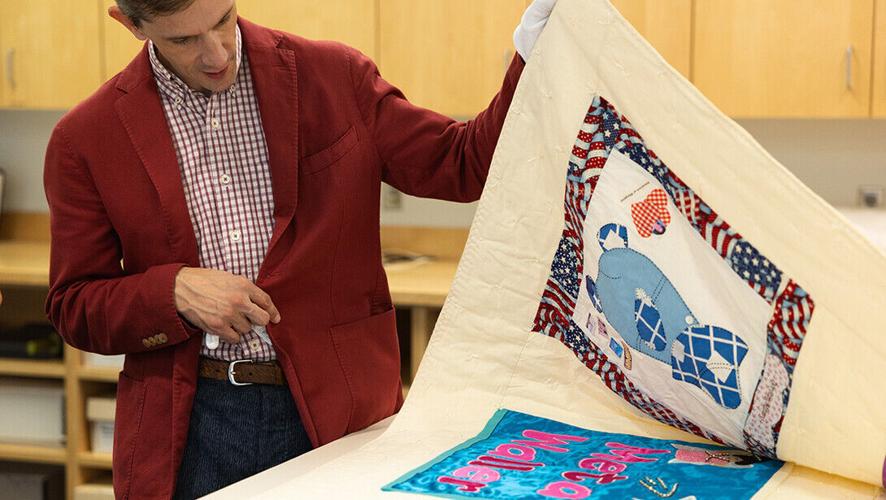
In the aftermath of the Sept. 11 terrorist attacks, thousands of people around the world stitched their grief into fabric. Together, they created a memorial quilt honoring each of the 2,977 victims, a sprawling tribute now preserved at the University of Nebraska–Lincoln's International Quilt Museum.
The museum is home to the United in Memory 9/11 Quilt Project, a memorial consisting of 142 massive panels containing an individual block for each victim of the Sept. 11, 2001, terrorist attacks.
"September 11th is one of those historic world events that will continually be commemorated, and this is an incredible way in which to do that holistically, with 142 panels and a block representing all of the nearly 3,000 victims," said Leslie Levy, executive director of the museum. "It really does tell and illustrate the entire story and the scope of 9/11."
People are also reading…
Twenty-five years after the attacks, the quilts serve as both a memorial and a historical record, offering a deeply personal perspective on one of the defining events of U.S. history.
The quilt project was organized by Corey Gammel and Peter Marquez, both of Long Beach, California, who visited Ground Zero shortly after the attacks and couldn’t shake their feeling of helplessness. Through a website and word of mouth, they recruited quiltmakers, crafters, family and friends of victims, and many who just wanted to help and find an outlet for their grief, to make the individual blocks.
About 3,600 people from 18 countries had a hand in making the quilts.
"There were so many people who were making quilts dedicated to 9/11 — that’s just what quilters do when an event like that happens: They turn to quilts as a way to deal with their grief, but also as a way to document that event,” said Carolyn Ducey, former curator of collections for the International Quilt Museum, who is now retired.
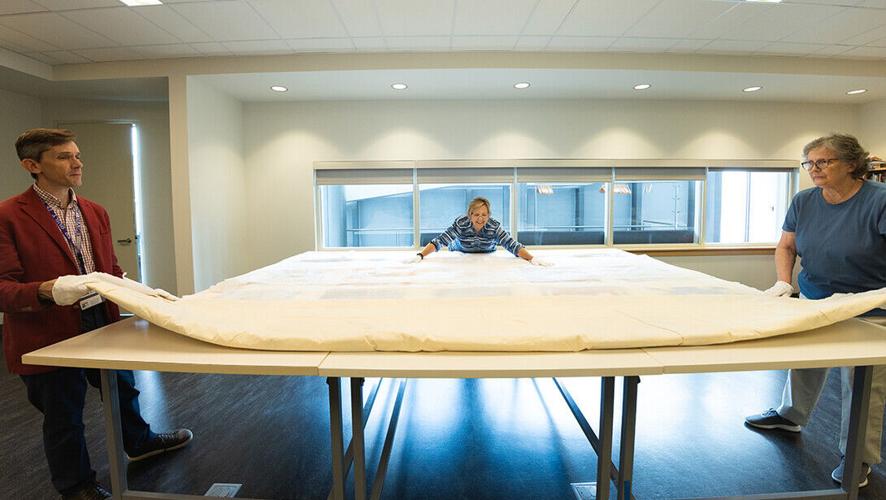
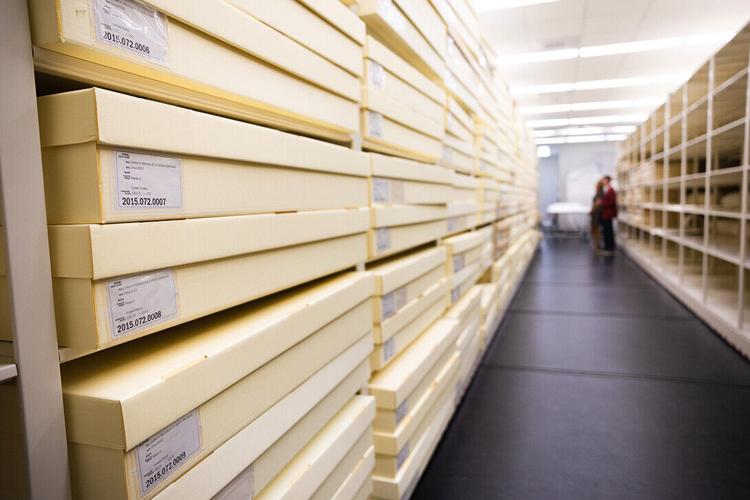
The 10-by-10-foot panels were acquired by the museum in 2015. Altogether, the quilt panels constitute 15,000 square feet. Ducey recalled working with Gammel extensively to plan for the delivery of the quilts.
“He’d been hauling them in a U-Haul-type truck, taking them from place to place for display, but he was starting to have some health problems and wanted to find a safe place for them,” Ducey said. “They were, in a way, his life’s work.”
Gammel died in 2021, according to a family post on social media.
Upon arrival, the museum team started its preservation work, including vacuuming and cataloging each piece.
"We were just happy to see Corey, happy to get those pieces in,” Ducey said. “But as we opened up pieces and we looked, the whole tone of the day changed and everybody just felt that weight of it. You start realizing all of these individuals were lost and there were these wonderful messages that were on their blocks."
And then, they saw it — the familiar red “N.”
Nebraska was there, too.
It was in a block made for Paul Eckna, a native New Yorker who graduated from Nebraska before returning to New York City to work in finance. He was killed in the North Tower.
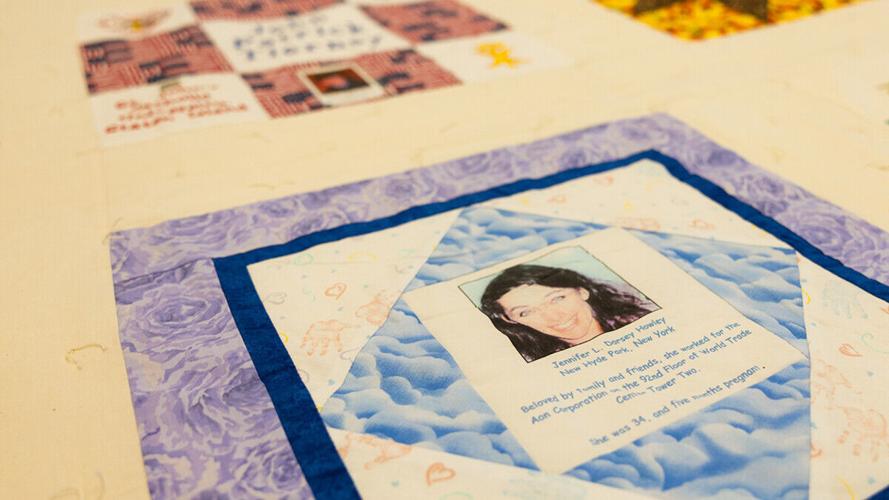
Nebraska natives Julie Geis, Navy Capt. Larry Getzfred, Monte Hord and Jennifer Dorsey Howley were also lost in the attacks.
"You can’t not be moved by seeing any panel. Seeing all of them together is astounding. It really puts into perspective the scope of 9/11,” Levy said. “Monumental."
Jamie Swartz, collections manager, pointed out the various techniques used on individual blocks. Each one is a different style and incorporates different materials. Contributors used photographs, embroidery, appliqué and personal messages honoring individual victims.
“They're from a time period where people had access to a lot of really unique materials, and they made these really highly personal,” Swartz said.
The panels are viewable online, and each block is searchable on a kiosk in the 9/11 exhibition room, part of the museum’s exhibition “Material Nation: 250 years of American Quilts,” on view through Dec. 19.
“We couldn’t show all of the pieces because we just don’t have the room, but we wanted to be sure that we included the quilts, especially for their families," Ducey said.
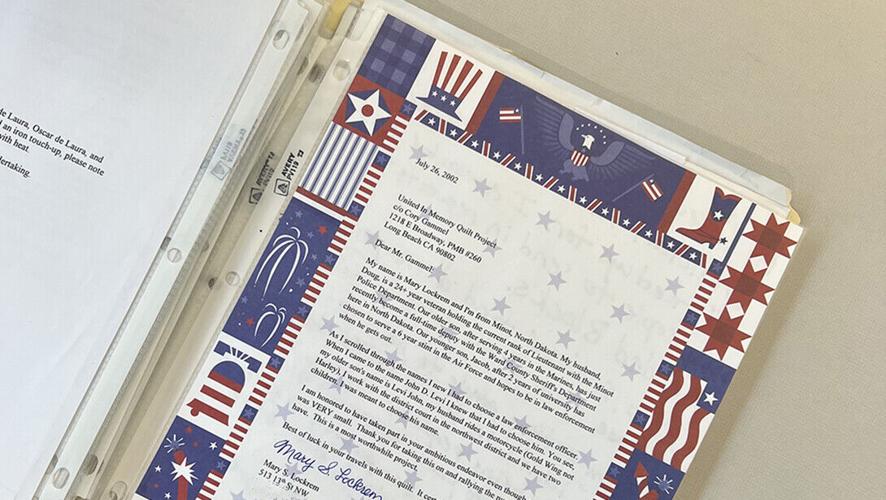
Part of the collection held by the university also includes Gammel’s records. He kept scrapbooks full of the individual notes that came with each block, along with news clippings about the project and letters from victims' families, thanking him for the work. Those are held now in the University Libraries' Archives and Special Collections.
The United in Memory quilt panels are part of the museum’s education collection, which allows them to be loaned out for display. Since acquiring the quilts in 2015, museum staff have worked with organizations across the United States to show the panels, most recently in Gering, Nebraska, at the Legacy of the Plains Museum. There, they showed two panels that included blocks for Hord and Geis.
“As a land-grant university, we are stewards of these quilts and we want them to be displayed, so we work with organizations often to loan them out,” Levy said. “And part of our mission as an encyclopedic museum is to accession and acquire quilts that document major world and global events. These quilts are incredibly important.”
As a part of the museum’s collection, the panels will be available for generations to come, which is important for remembering our collective history, Ducey said.
"It was just such an impactful time. It’s interesting to see people look at the quilts now, sometimes who are younger, that don’t remember that day and remember that feeling,” Ducey said. “But I think for those of us who lived through it, it was like nothing we’d experienced before ever, and it kind of shut the world down."


