


A University of Nebraska–Lincoln initiative is growing the state’s childcare system, rain or shine.
The Ruth Staples Child Development Lab School, housed in the College of Education and Human Sciences, is helping childcare providers across Nebraska incorporate the outdoors and nature-based learning environments into education. On behalf of the Learning Environments for All to Flourish (LEAF) Initiative, the lab school not only functions as a model for one way to implement the concepts, but faculty also are providing coaching for others on how to apply them in their own spaces.
“It focuses on activating their nature-rich environment,” said Jennifer Leeper Miller, lecturer and director of the Staples Lab. “We’re asking, ‘What do I do with my environment and how do I make it work for me?’ It’s based on that reflective practice and evaluation of how you teach in the space.”
People are also reading…
The LEAF Initiative is a multidisciplinary project initially launched in 2024 through the university’s Grand Challenges Catalyst grant and encourages schools and childcare centers to incorporate nature and their outdoor environment into lessons. The principal investigator is Anne Schutte, associate professor of psychology, and co-principal investigator is Sarah Karle, associate professor of landscape architecture. The project also includes investigators from Nebraska Extension and the Center for Brain, Biology and Behavior.
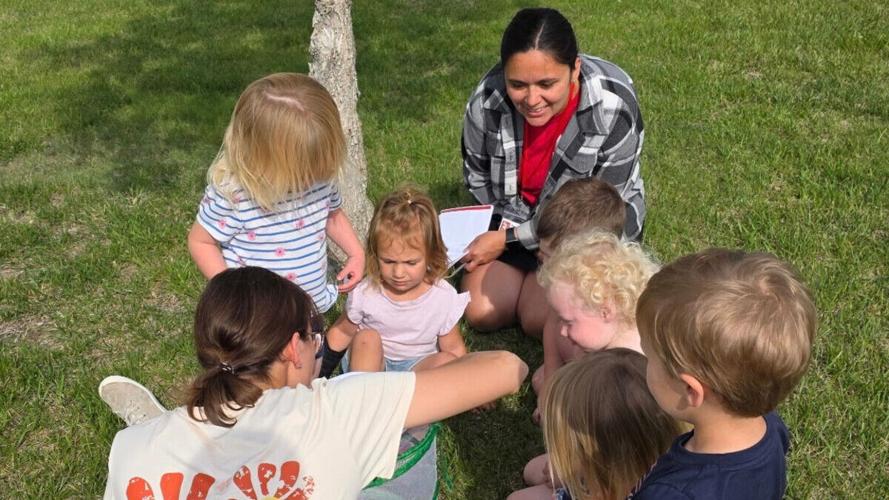
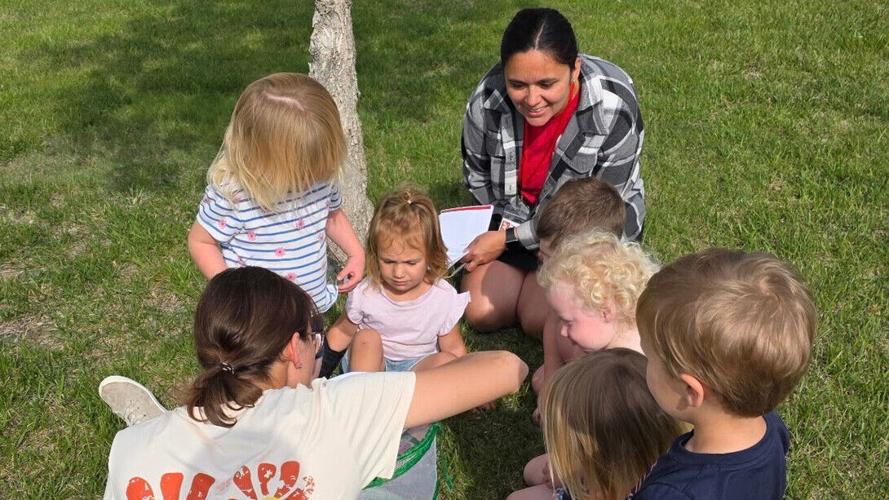
From the education side, Leeper Miller said this approach fosters an environment where children can explore and ask questions about what they see. Their curiosity can guide the educator into lessons about insects, weather, plants or other things the children might notice.
“Getting children out into the outdoor spaces helps their social-emotional development,” Leeper Miller said. “It encourages inquiry-based learning, which is a high-quality environment for children to learn in; and research shows teachers oftentimes are much more playful and it helps their stress levels, as well.”
Leeper Miller said this approach helps children build skills in investigation and problem solving that will benefit them into adulthood. Based on a question about insects in the outdoor space, a teacher might bring in magnifying glasses and books to help the students find answers to their questions about the topic. The Staples Lab, for example, replicates many of the indoor stations — like a library, build area or art studio — outdoors, to make the transition more seamless.
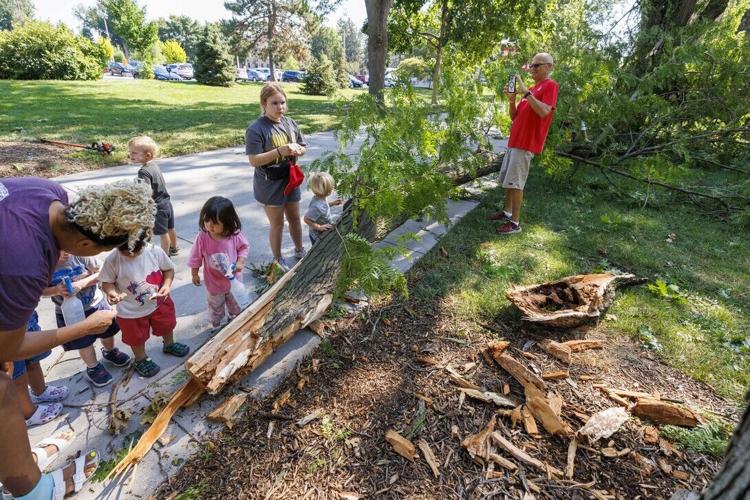
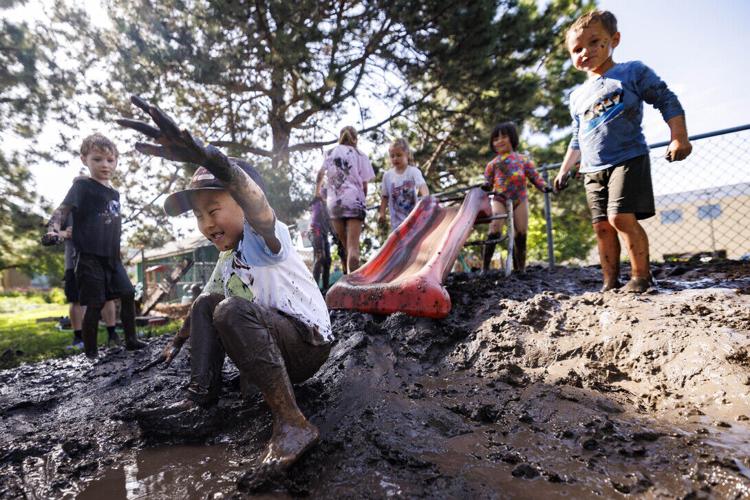
“Nature is constantly providing those provocations to the child, whether that be a rainy day and how that changes the soil and plant life, or grasshoppers in the grass,” Leeper Miller said. “The idea is that the teacher carefully observes those moments and builds on those moments.”
Ten centers across the state have participated in coaching on LEAF Initiative concepts. During each cohort, faculty guide two people from each participating school through a program that includes a professional development series, an invitation to a community of practice and individual coaching, along with grant dollars to make improvements to their outdoor classrooms. All of these steps provide ways for the educators to gather ideas to improve their space and their nature-based teaching.
“The coaches are going in, meeting the educators where they’re at, and problem-solving, supporting and inspiring the teachers to use what they currently have and also what the LEAF Initiative is enhancing,” Leeper Miller said.
Rather than dictating to a center how to implement these ideas, Leeper Miller said the participants can observe the environment at the Staples Lab, as the university demonstration school, to identify opportunities in their own space. The community of practice also offers opportunities to learn from how other schools in the state are applying the concepts. Leeper Miller said they can help the participants build a foundation for what a nature-based program could look like in their community.
“We’re doing it in our type of way in our environment,” she said. “We’re hoping that when people come and see us in practice that they’re thinking more along the lines of inspiration, not duplication, so they’re inspired by our strategies of teaching, our culture we’ve established here, to facilitate nature-based learning and the ability to start using their community for resources.”
Sarah Birkby, program enrichment director at Graceful Beginnings in Ravenna, Nebraska, said her center already had a goal of spending most of the day outdoors, but the opportunity to collaborate with the LEAF Initiative helped them elevate their practices and their space. The program allowed their entire staff to develop without having to transport all of them to a conference or other program. Birkby said the focus on outdoor learning opens up more opportunities by eliminating worry about mess or other restrictions that come with a traditional classroom.
“The kids benefit in so many different ways, not only from nature itself, but also having real-life experiences right at their fingertips,” she said. “They get to see live bugs. They get to see the changing of the seasons firsthand. It also gives them ample opportunity for everything they need to be successful in life: problem-solving, teamwork skills, gross and fine motor skills, all those important details. When they get to have the ownership over it, there’s empowerment that comes with that.”
Chelsea Brisbin, lecturer and mentor teacher at the Staples Lab, who served as the coach for Graceful Beginnings, said she was grateful to help these centers accomplish their goals, and she saw progress during her time there.
“They were really proud to show their growth, which was so great and really impactful for me,” Brisbin said. “It was great to be that resource to other teachers.”
Brisbin helped guide Graceful Beginnings through the installation of new activity-based outdoor classrooms and identify more ways to utilize them. They redesigned the space from an open playground to several dedicated activity stations, and Birkby said Brisbin offered them new insights into incorporating the space and how to engage students.
“She was able to help our teachers, she was very hands on, she was in with the kids and in with our teachers, too, really sharing her talent and sharing her knowledge,” Birkby said. “That was nice to have an outsider’s perspective. The way she talked to the kids was a good tool for our teachers to see different ways to talk to them. That helps with the relationships between the kids and the teachers.”
Brisbin said the Staples Lab’s role in the LEAF Initiative can help Nebraska childcare providers and educators expand their abilities and their students discover new worlds of skills.
“The goal is to help them feel confident in their teaching practices and ways to support children in outdoor learning spaces,” Brisbin said. “I feel like being that guide really helped them to feel more confident in finding those moments of learning … You can bring in the science, you can bring in the cause and effect, language skills, all within a simple moment of play these children came across.”


